
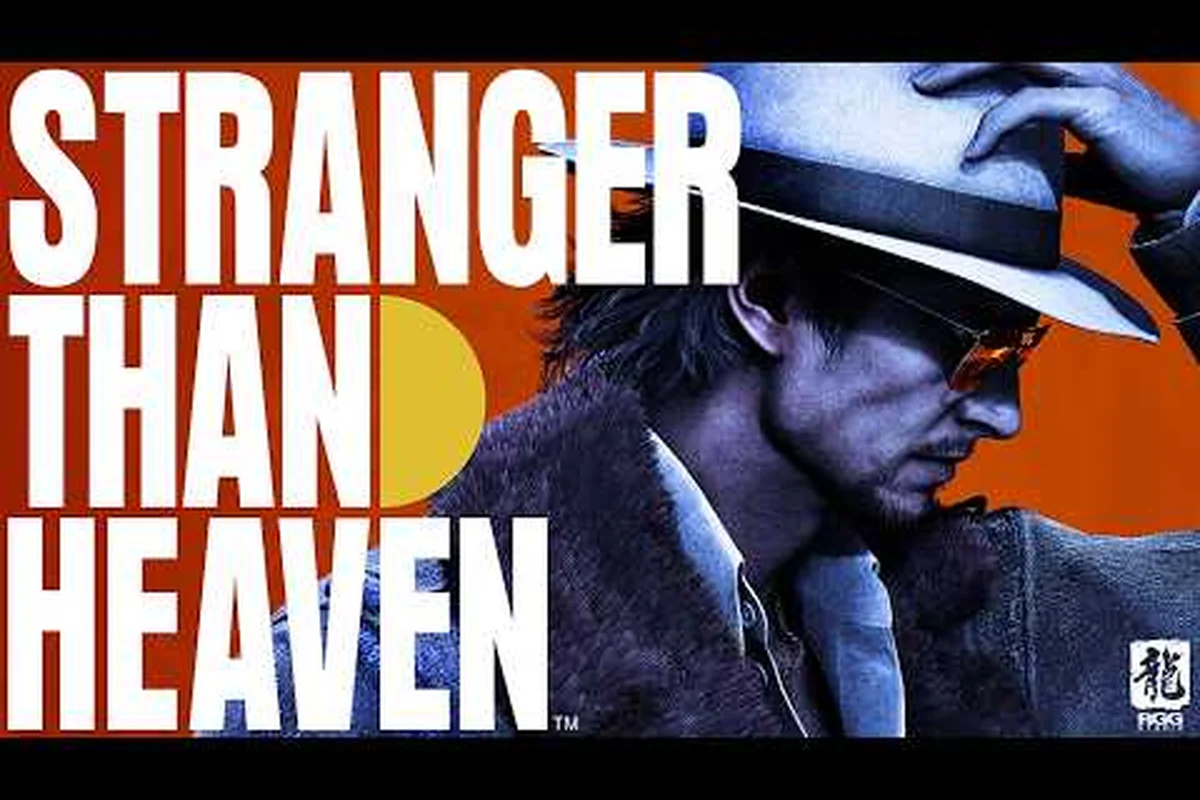
RGG Studio has spent two decades building the Like a Dragon universe around the streets of modern Tokyo, but STRANGER THAN HEAVEN rewinds the clock to the moment the modern yakuza myth was first being written. The game covers half a century of Japanese social upheaval across five playable eras, and every setting is anchored to a real city, a real industry, and a real cultural shift. This timeline-focused guide maps each era to the historical record so players can see where the fiction bends and where it stays faithful. For readers who want the broader story throughline, the story trailer breakdown walks through how the trailers sell that same five-era arc.
The Five Eras and Their Real-World Anchors
STRANGER THAN HEAVEN skips across fifty years in five era-sized chapters, and each one is grounded in a specific Japanese city that the player actually walks through. According to the official English site for STRANGER THAN HEAVEN, the ADVENTURE section is built so players "witness the evolution of Japanese culture and entertainment across the decades," beginning in gambling dens and ending in neon-lit entertainment districts. The official wiki entry confirms the same five-city scaffold: 1915 Kokura, 1929 Kure, 1943 Minami Osaka, 1951 Atami, and 1965 Shinjuku.
| Era | Year | Real City | Industry Anchor | Cultural Hook |
|---|---|---|---|---|
| 1 | 1915 | Kokura (Kyushu) | Naval-port gambling | Meiji/Taisho gambling dens |
| 2 | 1929 | Kure (Hiroshima Bay) | Naval shipyard | Foreign jazz clubs, military port |
| 3 | 1943 | Minami Osaka | Wartime black market | Resource rationing, total war |
| 4 | 1951 | Atami (Shizuoka) | Coastal hot spring | Postwar US occupation tourism |
| 5 | 1965 | Shinjuku (Tokyo) | Entertainment district | Pre-Olympic economic boom |
Era 1 — 1915 Kokura and the Gambling-Den Origin Point
Kokura in 1915 was a small castle town in northern Kyushu that owed its prosperity to the nearby military port of Moji and the coal traffic that moved through it. The Taisho era had loosened public morality laws after decades of strict Meiji discipline, and the result was a fast-growing network of parlor gambling venues that catered to soldiers, port workers, and traveling merchants. RGG Studio leans into that setting by staging Daito's youth in the kind of low-ceilinged gambling hall where a young man could learn to read people before he learned to read books.
The Kokura chapter matters most because it plants the Tojo Clan origin seed. The actual Tojo Clan of the Like a Dragon games does not exist in this period, but STRANGER THAN HEAVEN treats the era as a mythological well from which the clan's later ideology is drawn. Players who want a closer look at who inherits that ideology in the 1965 chapter should check the Tojo Clan character roster, which traces the leadership handoff across the timeline.
Era 2 — 1929 Kure and the Foreign-Port Influence
Kure in 1929 was one of Japan's busiest naval cities, home to the Imperial Navy's main shipbuilding yards and to a foreign community of British, American, and German engineers. That foreign presence is the cultural pivot of the second era: jazz clubs opened to serve the foreign workers, and local musicians started absorbing swing rhythms and Western dress codes. STRANGER THAN HEAVEN uses Kure as the moment when Daito and Yu first encounter the kind of cosmopolitan street culture that would later define Tokyo.
The historical hook here is the cultural translation of foreign entertainment into local style, which the official site describes as part of the game's broader arc of "entertainment evolving across the decades." Kure is also where the second chapter ends on a tonal break, because the 1930s militarization would soon shut down the very jazz clubs the era introduced.
The Yakuza Connection and the Project Century Lineage
STRANGER THAN HEAVEN was originally announced under the working title Project Century, and that name still does a lot of work in explaining the game's design intent. A project called "Century" because it is covering roughly one hundred years of Japanese social history, and because it is the prequel layer beneath every yakuza story RGG has told since 2005. The connection is not cosmetic: the Like a Dragon series begins with Kiryu in 1995, and STRANGER THAN HEAVEN ends in 1965, which means the game covers the thirty years of social and underworld change that precede the entire existing saga.
| Year | Game | Story Position | Relation to STRANGER THAN HEAVEN |
|---|---|---|---|
| 1915 | STRANGER THAN HEAVEN — Era 1 | Origin seed | Earliest playable chapter |
| 1929 | STRANGER THAN HEAVEN — Era 2 | Cultural bridge | Foreign influence enters the cast |
| 1943 | STRANGER THAN HEAVEN — Era 3 | Wartime fracture | Black-market networks form |
| 1951 | STRANGER THAN HEAVEN — Era 4 | Postwar reset | Tojo-style organizations consolidate |
| 1965 | STRANGER THAN HEAVEN — Era 5 | Direct prequel | Closes 30 years before Yakuza 1 |
| 1995 | Like a Dragon (Yakuza 1) | Series start | Kiryu's Kamurocho era |
| 2005 | Yakuza 2 | Series sequel | First numerical sequel |
Why the Tojo Clan Origin Mythology Matters
The Tojo Clan of the Like a Dragon games is first named in the late-1980s backstory of the original Yakuza, but STRANGER THAN HEAVEN pushes the yakuza timeline back to the period when the modern yakuza was actually being invented. Real post-war yakuza groups did consolidate in the 1940s and 1950s, often emerging from wartime black-market networks (the "yamiichi") and then absorbing labor-dispatch rackets during the Korean War boom. The 1951 Atami chapter in STRANGER THAN HEAVEN is the closest the game gets to that real-world pattern, which is why that era reads as the most "yakuza-shaped" in spirit even though the cast is not yet using the Tojo name.
The narrative also uses the yakuza connection as a thematic mirror. Kiryu and the rest of the modern cast are constantly talking about honor, family, and debt as if they were timeless virtues, and STRANGER THAN HEAVEN stages those same conversations in the 1915 gambling dens where the vocabulary was still being invented. Players who want to see how that thematic thread lands in the final chapter should follow the link to the ending explained guide once the game is out, because the 1965 chapter is the emotional hinge where the prequel and the modern series meet.
The 1943 Wartime Chapter and the 1951 Postwar Pivot
The third and fourth eras of STRANGER THAN HEAVEN are the most politically loaded, and they are also the ones the developers have been most careful about. According to the Wikipedia summary for the title, the project intentionally "omits real historical events unless directly connected to Daito's story," which is why the 1943 chapter focuses on a black-market network in Minami Osaka rather than on the war itself. The setting is the resource-rationing economy of late-war Japan, when ordinary citizens traded scarce goods through informal channels that doubled as recruitment pools for postwar criminal syndicates.
The 1951 Atami chapter then picks up the social wreckage. The San Francisco Peace Treaty had just taken effect, US occupation forces were still present, and coastal resort towns like Atami were being marketed to occupation personnel as rest-and-recreation destinations. That atmosphere of legal ambiguity, foreign-currency tourism, and a suddenly mobile underclass is the cultural soil in which the real Tojo-kai (founded in 1948) and the real Inagawa-kai (founded in 1948) actually took root, and STRANGER THAN HEAVEN uses the Atami chapter to dramatize that exact moment.
| Real Group | Founded | Region | STRANGER THAN HEAVEN Mirror |
|---|---|---|---|
| Tojo-kai | 1948 | Tokyo / Kanto | Thematic predecessor (not the same group) |
| Inagawa-kai | 1948 | Tokyo / Kanto | Thematic sibling organization |
| Yamaguchi-gumi | 1915 | Kobe / Kansai | Echoes Era 1 Kansai gambling roots |
| Aizu Kotokai | 1961 | Fukushima | Late-stage consolidation model |
What the Timeline Skips and Why
The game does not give the player a playable chapter in 1937, 1945, or 1948, even though those are the densest years for any "yakuza prequel" reading. The decision is a design one: STRANGER THAN HEAVEN is a character drama about Makoto Daito and Yu Shinjo, not a war story, and the developers have stated through the official site that the narrative is built around decade-sized cultural beats rather than headline events. Players looking for a deeper symbolic reading of what the wartime chapter does and does not say should browse the themes and symbolism guide, which decodes the era transitions as cultural allegory.
The 1965 Shinjuku Finale and the Bridge to the Modern Series
The final playable era of STRANGER THAN HEAVEN is 1965 Shinjuku, and it is the chapter that closes the bridge to the Like a Dragon saga. Tokyo in 1965 was about four years away from hosting the Summer Olympics, the economy was growing at double-digit rates, and the Shinjuku entertainment district was being rebuilt on top of the burned-out black-market stalls of the immediate postwar years. That same Shinjuku ward is the geographic heart of the modern Like a Dragon games, which means the 1965 chapter is, in effect, a prologue to Kamurocho.
The narrative also closes the Like a Dragon prequel loop. Makoto Daito and Yu Shinjo are both described in the project's own terminology dictionary as the protagonist and the friend/rival pair, and the 1965 chapter is the last time the player controls Daito as a young man before the cast passes into the era of Kiryu, Majima, and Ichiban. For readers who want a frame-by-frame look at how the trailers hint at that handoff, the cast reveal trailer breakdown maps each of the five era trailers to the cast shifts that follow.
Key Cultural Benchmarks the 1965 Chapter Nods To
| Real 1965 Event | Cultural Impact | Echo in STRANGER THAN HEAVEN |
|---|---|---|
| Tokyo Olympics announced | Construction boom, leisure spending | Rebuilding of Shinjuku nightlife district |
| Income Doubling Plan | Mass middle-class consumption | Street-level money flow in side content |
| Height of "Group Sounds" bands | Japanese answer to British Invasion | Era 5 soundtrack layering |
| Start of Vietnam War buildup | US military footprint expands | Lingering occupation-era side characters |
What the Project Century Working Title Tells Us
The "Project Century" name is still attached to STRANGER THAN HEAVEN in marketing materials and store descriptions, and it is worth understanding because it is the clearest public signal of what kind of story the developers think they are telling. A century, in this context, is not the strict 100 years from 1865 to 1965; it is a loose span of 50 to 100 years, and the project name is meant to evoke that breadth rather than to nail a date range. The official Steam page lists the title simply as STRANGER THAN HEAVEN, but community coverage of the early reveal still uses the project century story framing for the same reason.
That framing is also a hint about the development team's ambitions. RGG Studio has historically used its prequels and side stories to fill in the cultural soil beneath the modern yakuza cast, and the project century name tells players to expect a similar treatment at a much larger scale. According to community reporting on the official Discord and the Tokyo Game Show floor demos, the developers have also said that the project century label was a useful internal anchor for keeping the writers focused on the long arc rather than on any single era. Players who have been following the franchise since 2005 will recognize that pattern: it is the same production philosophy the team used when it built the Kiwami remakes and the Gaiden entries, just stretched across five playable chapters.
The Project Century Story Spine in One Table
| Chapter | Year | Story Spine | Real-History Mirror |
|---|---|---|---|
| 1 | 1915 Kokura | Daito grows up in gambling culture | Meiji/Taisho moral liberalization |
| 2 | 1929 Kure | Daito and Yu find a shared purpose | Taisho cosmopolitan peak |
| 3 | 1943 Osaka | Wartime fracture splits the friendship | Late-war black-market consolidation |
| 4 | 1951 Atami | Postwar rebuilding reshapes the underworld | Occupation-era yakuza founding wave |
| 5 | 1965 Shinjuku | Daito passes the torch to a new generation | Pre-Olympic Tokyo entertainment boom |
The Like a Dragon Prequel in Practice
Putting the yakuza connection in plain terms, STRANGER THAN HEAVEN is the first RGG Studio title where the player can walk through the same Tokyo ward (Shinjuku) that the rest of the franchise treats as home turf, but fifty years before Kiryu ever set foot there. The visual design of the 1965 chapter leans into glass storefronts, taxi fleets, and a nightlife strip that already looks recognizably Kamurocho-adjacent even before the modern neon vocabulary is fully in place. For long-time fans of the series, that last chapter is the payoff, because it is the moment when the older story finally feels continuous with the newer one.
For new players who have never touched a Like a Dragon title, the 1965 chapter works as a soft on-ramp. The narrative is built so that the cast is fully introduced inside the STRANGER THAN HEAVEN bubble, and the modern-series connections are layered in as background flavor rather than as required reading. That is also why the developers have been careful to keep the Like a Dragon prequel framing visible in the marketing: the game is meant to be playable as a standalone historical drama, but it is also designed to reward players who already know what comes next. Players who finish the 1965 chapter and want to walk straight into the modern series can move from Daito in 1965 to Kiryu in 1995 without any narrative gap beyond the thirty missing years.
Frequently Asked Questions
Is STRANGER THAN HEAVEN really a Like a Dragon prequel?
Yes. RGG Studio has positioned STRANGER THAN HEAVEN as a distant prequel to the Like a Dragon series, covering the half-century of Japanese social change that precedes the original 2005 Yakuza game. The connection is thematic and geographic rather than direct: STRANGER THAN HEAVEN ends in 1965 Shinjuku, and the modern series begins in 1995 Kamurocho, which sits inside the same Shinjuku ward.
Why does the game skip from 1929 to 1943?
The 1930s and early 1940s are the years when Japan's militarization closed down the foreign jazz clubs and entertainment venues that defined the 1929 Kure era. Rather than stage a playable chapter in a period of strict cultural repression, the developers compressed the wartime transition into the single 1943 Minami Osaka chapter, which is staged around a black-market network instead of around the war itself.
Does the Tojo Clan actually exist in STRANGER THAN HEAVEN?
The Tojo Clan name from the modern Like a Dragon games does not appear in 1915, 1929, 1943, or 1951 in the playable story, because the in-game Tojo organization is founded later. STRANGER THAN HEAVEN treats the early eras as the Tojo Clan origin mythology, the cultural and organizational soil from which the named clan will eventually grow. Players who want the modern cast mapped to that origin should read the Tojo Clan characters guide.
What was the Project Century working title?
Project Century was the internal code name RGG Studio used during development, and it is still attached to STRANGER THAN HEAVEN in some marketing materials and community coverage. The name is shorthand for the project's half-century scope, not a strict 100-year date range, and the developers have used it internally to keep the writers focused on the long cultural arc rather than on any single era.
Do I need to have played Like a Dragon to enjoy STRANGER THAN HEAVEN?
No. STRANGER THAN HEAVEN is written as a standalone historical drama, and the modern-series connections are layered in as background flavor rather than as required reading. Players who finish the game and then move into the modern series will recognize Shinjuku, the entertainment district vocabulary, and the organizational archetypes, but the prequel tells a complete story on its own.