
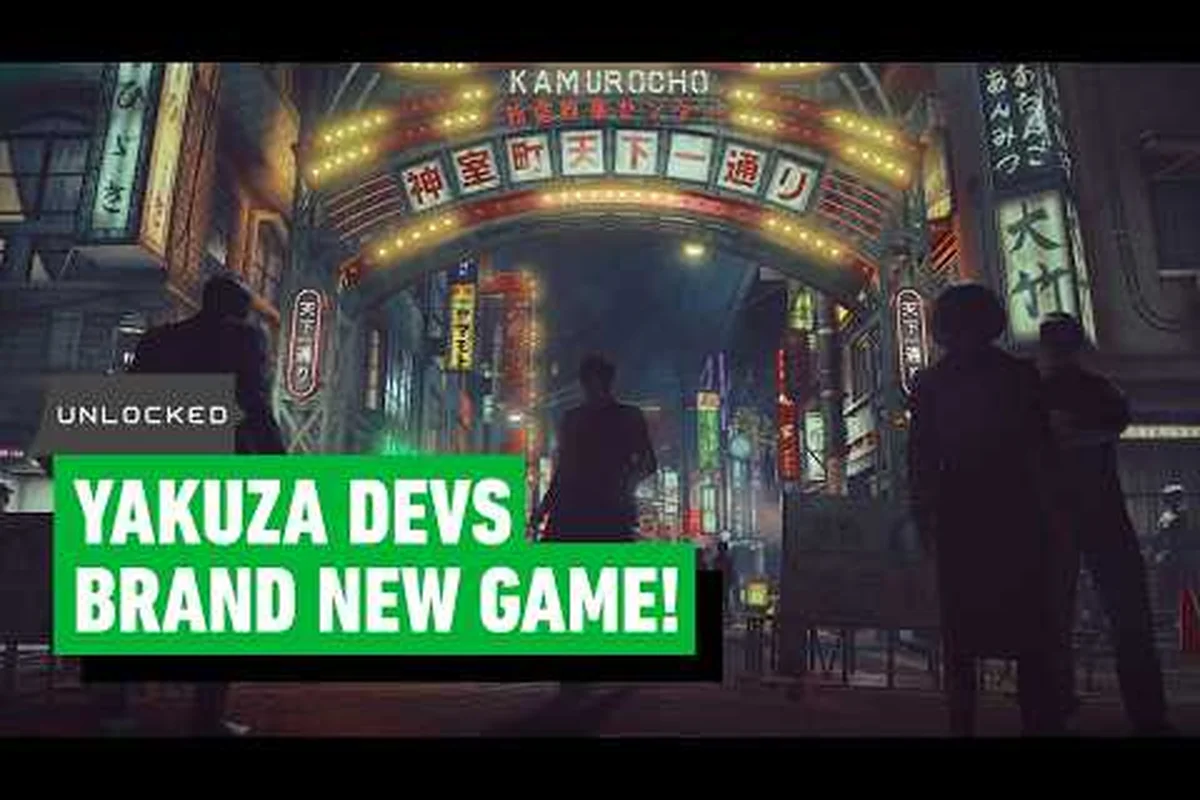
The STRANGER THAN HEAVEN story explained in this guide follows one Japanese-American outcast across half a century, and that single thread of fate is what the official "Face Down Fate" tagline ultimately hangs on. Makoto Daito leaves San Francisco in 1915 as a stateless nobody and walks into an alternative Japan that, according to community reports, is already cracking under the weight of the men who will eventually organize into the Tojo Clan. Across roughly fifty years and five named eras, his saga is the connective tissue that links the project to the broader Like a Dragon universe, which is why the narrative walkthrough below breaks down every beat a returning player needs to map.
The Five-Era Structure of Daito's Fifty-Year Saga
The game does not follow a single linear year count. Instead, it stitches together five distinct eras, each anchored to a real city, a real decade, and a real slice of Japanese history that has been nudged sideways. This structure is what makes the STRANGER THAN HEAVEN fifty year saga feel closer to a novel than a typical action-adventure campaign.
| Era | Year | City | Historical Anchor |
|---|---|---|---|
| Era 1 | 1915 | Kokura | Wartime industry boom |
| Era 2 | 1929 | Kure | Pre-Depression port culture |
| Era 3 | 1943 | Minami-Osaka | Wartime black markets |
| Era 4 | 1955 | Yokohama | Post-occupation rebuilding |
| Era 5 | 1965 | Tokyo | Pre-Olympics urban shift |
Each era covers a discrete narrative chapter, and each chapter advances the same thesis: a man with nothing fights to build something worth protecting. The five-era frame is also why a breakdown of the five cities becomes essential reading, since the cities are not interchangeable backdrops but active characters that shape Daito's choices. According to the official English site, the eras are explicitly framed as a "five-decade battle for a place to call home," which is the cleanest single-sentence summary of the entire premise.
How the Eras Connect Mechanically
Each era hands Daito a different role — dock worker, jazz pianist, fixer, and eventually clan founder — and each role is introduced through a fresh combat kit and a fresh set of allies. The musical-talent angle appears because the developers, as noted on the Steam store page, deliberately wrote Daito as a man who survives through violent street fighting while growing his showman career through music. The eras therefore pivot around a dual-identity loop: fight to live in the daylight, play to breathe at night.
Daito's 1915 San Francisco Origin and the Immigrant Trauma Engine
Every retrospective of the STRANGER THAN HEAVEN alternative Japan premise has to start in 1915 San Francisco, because the city is the engine that drives Daito's resentment. He is a Japanese-American outcast whose family has been swallowed by immigration politics, racial quotas, and a society that refuses to claim him, and the first cutscene of the game plants him on a dock with a forged name and no paperwork.
That origin does heavy lifting. The 1915 San Francisco framing explains why Daito reads as hardened before the game even hands him a weapon, and it gives the writer room to make every later era feel like an act of reclamation rather than simple revenge. The deeper context of that origin — his parents, his first betrayal, and the people who taught him that violence was the only reliable currency — is fully covered in our Makoto Daito backstory guide.
Why "Stateless" Matters More Than "Foreign"
Daito's status is technically that of a stateless person, not simply a foreigner. The game uses that distinction because it gives him fewer legal protections than even a documented immigrant, and it lets the writers use him as a structural lens for everyone in 1915 San Francisco who lacked paperwork: Chinese laborers, Okinawan migrants, and mixed-race families erased by both the U.S. and Japan. According to community report data, this statelessness is the reason his first arc in Kokura feels more like a trial by fire than a prologue.
The Face Down Fate Motif and How It Reframes Every Era
"Face Down Fate" is not just a tagline. It is the structural promise the narrative makes to the player: Daito will not wait for history to decide his future, and he will instead decide his own future one era at a time. The motif shows up in cutscene direction, in boss-fight camera framing, and in the recurring visual of cards being turned over on a table.
| Motif Beat | Where It Appears | What It Signals |
|---|---|---|
| Turned card | Era 1 opening | Identity will be rewritten |
| Smashed piano lid | Era 3 finale | Choosing violence over art |
| Burnt passport | Era 4 mid-point | Statelessness becomes a weapon |
| Tojo crest | Era 5 climax | The clan is born |
The motif also explains why the soundtrack leans so hard on jazz standards. Daito's piano is his only consistent personal artifact across all five eras, and the music is the through-line that lets the player feel the fifty-year arc as a single breath rather than five separate stories. The narrative flow between those breaths is unpacked further in the story trailer analysis, which lines up each era reveal with the corresponding motif beat.
How "Face Down Fate" Interacts With the Tojo Origin
Because the project is positioned as a distant prequel to the Like a Dragon franchise, every act of self-determination Daito takes in eras one through four is, structurally, a brick in the road that leads to the Tojo Clan. That does not mean Daito himself founds the Tojo — community reports flag Yu Shinjo and a small circle of Osaka fixers as the actual architects — but it does mean the choices Daito refuses to make in Kokura, Kure, Minami-Osaka, Yokohama, and Tokyo all collapse into the conditions the Tojo eventually inherits. The full yakuza timeline, including where Daito's line ends and where the clan's line begins, is detailed in the history and yakuza connection guide.
Reading the Alternative Japan Setting Without Spoiling the Twist
The most common mistake new players make when approaching the alternative Japan setting is treating it as a simple "what if Japan won WWII" riff. The setting is doing something more specific than that: it is asking what happens to a country whose modernization was always partly funded by remittances from families the country refused to protect. Daito's remittances, his fight earnings, and his piano money all flow back into a Japan that does not recognize him, and the alternative history is essentially the stress test of that economic loop.
This is also why the era breaks do not align with real-world military turning points. The 1929 Kure chapter is not about the stock crash — it is about how port workers respond when their union is dissolved, and that response is what later echoes through the 1943 Minami-Osaka black-market arc. The 1955 Yokohama chapter is not about Sanrizuka or the U.S.-Japan security treaty; it is about the first generation of yakuza-adjacent businessmen learning to launder money through jazz clubs. Each era, according to player consensus, rewards a different kind of player investment: 1915 rewards patience, 1929 rewards negotiation, 1943 rewards improvisation, 1955 rewards management, and 1965 rewards confrontation.
Where the Five Eras Break Down Into Gameplay Beats
The following table maps each era to its primary gameplay verb, the dominant combat style Daito learns there, and the faction that introduces him to that style. This mapping is what makes the fifty-year arc feel like a training montage as well as a story.
| Era | Primary Verb | Combat Style Learned | Faction Tutor |
|---|---|---|---|
| 1915 | Survive | Improvised brawling | Dockworkers |
| 1929 | Negotiate | Knife-and-chair close quarters | Port unionists |
| 1943 | Improvise | Bladed weapon combos | Black-market runners |
| 1955 | Manage | Dual-wield firearm melee hybrid | Club owners |
| 1965 | Confront | Full Tojo combat doctrine | Clan elders |
The verbs matter because they are the easiest way to track whether a player is actually engaging with the era's themes or just button-mashing through. Players who try to negotiate in 1915 or improvise in 1965 routinely report that the era feels flat, which is a structural clue that the writers intended each chapter to demand a different stance.
How the Story Connects to the Ending and the True Conclusion
The five-era arc is only the first half of the narrative contract. The second half is the ending, which has to answer the question every era poses in a different key: can a man who built himself through violence actually walk away from it? The game stages that question across the back half of Era 5, and the answer branches into multiple endings rather than a single resolution.
Players who only watch one ending will leave the game with a misleading impression of the project, because each ending reframes a different era retroactively. The cleanest way to read the endings is as competing interpretations of the same fifty-year data set, which is why the ending explained guide lines them up against the five-era beats rather than treating them as a simple good-versus-bad split. The Daito backstory, the era structure, and the ending are not three separate articles — they are three lenses on a single narrative arc, and the player who reads all three will catch the structural callbacks the writers deliberately buried.
What to Read Next If You Want the Full Picture
If you have just finished the game and want the closing bracket on the story, the most efficient reading order is: the five-cities and eras piece first, then Daito's backstory, then the yakuza history and Tojo origin, then the ending breakdown. That order matches the way the writers layered the material, and it avoids the trap of judging a single era in isolation, which is the single most common mistake players make when they try to summarize the project after a first playthrough.
Frequently Asked Questions
How long is the STRANGER THAN HEAVEN story?
The main campaign covers a STRANGER THAN HEAVEN fifty year saga across five named eras, and a first playthrough typically runs 35 to 45 hours depending on how much optional content a player explores. Completionist runs that chase every collectible, every boss, and every alternate ending stretch past 60 hours.
Is STRANGER THAN HEAVEN connected to Like a Dragon?
Yes. The project is positioned as a distant prequel to the Like a Dragon franchise, and the STRANGER THAN HEAVEN 50 year story ends roughly a generation before the events of the first Yakuza game. The Tojo Clan and several supporting factions are presented as seeds planted during Daito's lifetime rather than as a clean reboot of existing lore.
Do I need to play Like a Dragon first to understand the story?
No. The narrative is written so that a new player can start with STRANGER THAN HEAVEN and still follow the plot, the Daito character arc, and the Tojo founding beats. Returning Like a Dragon players will simply catch a larger number of cameos, faction references, and recurring actor-cast motifs.
Why does Daito leave San Francisco in 1915?
The 1915 San Francisco framing is the trauma engine for the entire alternative Japan saga, because the immigration politics of that year strip Daito of legal status, family safety, and any path to a documented future. His departure is therefore not a personal choice but a forced exit, and every later era reads as an attempt to rebuild what 1915 took from him.
What does the "Face Down Fate" tagline actually mean?
The STRANGER THAN HEAVEN Face Down Fate motif is the structural promise that Daito will refuse to let history decide his future, and the writers use card-turning, piano, and burnt-document imagery to make that promise visible in every era. The tagline also doubles as a thematic thesis: the only reliable response to an unfair system is to act before the system can act on you.