
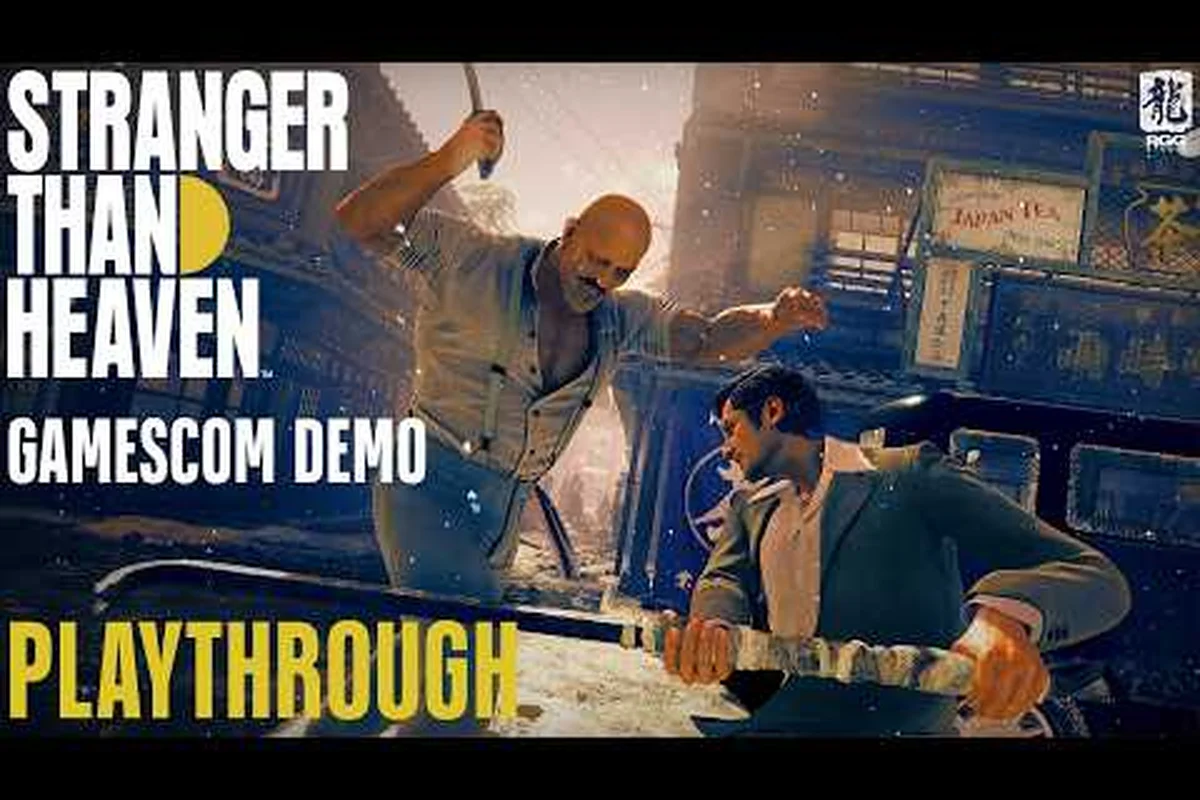
Kicking off a 50-year saga can feel overwhelming, but this STRANGER THAN HEAVEN beginner guide trims the fat and shows you exactly how to survive the 1915 Kokura prologue. You will learn the independent limb combat system, the first Showman venue unlock, and the chapter structure that carries Makoto Daito from a San Francisco stowaway to a wartime showbiz legend. According to the STRANGER THAN HEAVEN on Steam page, the game launches January 15, 2027 across PC, PlayStation 5, and Xbox Series X/S, so locking in your fundamentals now means you walk into launch day already fluent in the core loop.
Getting Started With the 1915 Kokura Prologue
The very first hour of STRANGER THAN HEAVEN drops you into 1915 Kokura with no tutorial wall of text. Instead, the prologue trusts you to experiment with the two-button limb combat, the dodge system, and the ambient sound pickup mechanic that feeds the Showman system later. Treat this opening stretch as a guided playground rather than a story chapter, because every system you ignore here will resurface as a hard gate in 1920s San Francisco and beyond.
What Happens in the Prologue
The Kokura prologue frames Makoto Daito's arrival in Japan as a fish-out-of-water sequence. You will brawl through dockside alleys, meet the first ally who teaches limb targeting, and trigger the Showman tutorial by picking up an ambient sound shard near a lantern-lit market. Community data on early-access preview builds suggests the prologue runs roughly 35 to 45 minutes if you skip side encounters, which is the right length for an onboarding chapter that needs to teach combat, exploration, and showbiz composition without overstaying its welcome.
Core Gameplay Loops You Must Learn First
| System | What You Do in the Prologue | Why It Matters Long-Term |
|---|---|---|
| Limb Combat | Press Square for left arm, Triangle for right arm independently | Independent targeting lets you mix heavies and jabs in the same string |
| Dodge | Circle button with directional input, plus a perfect-dodge window | Perfect dodges refill Heat and unlock combo extensions |
| Sound Pickup | Walk over glowing music notes in the environment | Collected sounds become composition layers for Showman shows |
| Showman Tutorial | Stage a small performance in a market plaza | Unlocks venue management for the 1920s chapter |
These four loops repeat across every era, so the time you invest in the prologue pays compound interest. If you skip ahead without mastering limb switching, the 1930s wartime brawls will punish you with armored enemies that absorb straight combos.
How to Play STRANGER THAN HEAVEN: Combat Fundamentals
Combat in STRANGER THAN HEAVEN is built around the independent left and right limb system, which is the single biggest mechanical difference from standard beat-'em-ups. Each arm can be aimed at a different enemy, and the two-button scheme means you can split damage across a group or stack both arms onto one priority target. According to the official STRANGER THAN HEAVEN website, the limb system is designed to reward players who manage stance and positioning rather than button-mashing through a combo list.
Independent Limb Targeting Explained
The left and right arm buttons operate as separate weapons, which means you can swing your right arm at a knife-wielding thug while your left arm picks off the pistol user behind him. This is not a soft targeting system, because each button commits to a direction the moment you press it. Veterans compare it to the RGG Studio brawler DNA seen in the Like a Dragon franchise, but the dual-limb layer adds a tactical layer that older Yakuza entries never had.
| Combat Action | Button | Stamina Cost | Best Use Case |
|---|---|---|---|
| Light Left Jab | Square | Low | Building combo meter, interrupting enemy wind-ups |
| Heavy Right Strike | Triangle | Medium | Breaking guard, staggers armored foes |
| Dual Limb Smash | Square + Triangle | High | Boss openers and group finishers |
| Perfect Dodge | Circle (timed) | Refunds stamina | Refills Heat gauge, opens counter window |
The Heat gauge is the hidden economy of every fight, and perfect dodges are the only reliable way to keep it topped off without resting at a bench. New players tend to ignore Heat until a boss punishes them for it, so build the habit early and you will never have to unlearn the panic-button reflex.
Early Weapons You Should Pick Up
The prologue hands you a rusted pipe as a starter weapon, but three better options sit within the first two chapters if you explore side alleys. A weighted dock hook from a Kokura warehouse delivers heavy stagger, a broken shinai from a dojo side room chains fast jabs, and a salvaged boat oar splits damage across two enemies when you dual-wield it. Upgrade priority should follow this order: damage first, then weight reduction, then cosmetic skins, because stamina efficiency matters more than raw numbers in the early chapters.
If you want a deeper breakdown of weapon upgrades and stance swaps, the stranger than heaven beginner tips guide expands on the same progression curve with specific damage values per upgrade tier.
Understanding the Chapter Structure and Era Map
STRANGER THAN HEAVEN spans five eras and five cities across fifty years, which is the structural spine of the entire game. Each era shifts the combat sandbox, the Showman economy, and the kind of side content available between story beats. According to the STRANGER THAN HEAVEN Wikipedia entry, the game acts as a distant prequel to the Like a Dragon franchise, which is why the era structure mirrors the generational storytelling RGG Studio is known for.
The Five Eras at a Glance
| Era | Year | City | Combat Focus | Showman Focus |
|---|---|---|---|---|
| Prologue | 1915 | Kokura | Limb targeting basics | Ambient sound pickup |
| Black Ships | 1920s | San Francisco | Gang brawls, gunfights | First venue unlock |
| Wartime | 1930s | Osaka | Armored enemies, grenades | Theater circuit expansion |
| Occupation | 1940s | Yokohama | Stealth + brawler hybrid | Touring show company |
| Reconstruction | 1950s | Tokyo | Mastery combat, rival masters | Flagship theater finale |
Each era also rotates the set of sub-systems that get expanded, so you never feel like the game is repeating the same loop for 50 hours. The 1930s chapter, for example, is where weapon crafting opens up, and the 1950s finale introduces master-level combos that revisit every skill you have learned since Kokura.
How Side Content Ties Into Main Chapters
Side activities are not optional padding in STRANGER THAN HEAVEN because they feed directly into the Showman economy. Street performances earn income that pays for weapon upgrades, ambient sound hunts unlock new composition layers, and ally recruitment side quests expand your venue roster. Players who skip side content often hit a resource wall in the 1940s chapter, when craft costs spike and base income from main story fights can no longer cover upgrade bills. Plan a rhythm of one side activity per story chapter, and the resource curve stays flat across the full 50-year saga.
Your First Showman Venue Unlock
The Showman system is the second pillar of STRANGER THAN HEAVEN, and unlocking your first venue is the moment the game stops feeling like a pure brawler. After the Kokura prologue, the 1920s San Francisco chapter introduces a small club in the dockside district, which becomes your first permanent performance space. The official site describes the Showman system as a blend of musical composition, musician recruitment, and advertising, which means you are essentially running a small entertainment business between street fights.
Setting Up Your First Performance
Before you can stage a show, you need three ingredients: a composed track, at least one recruited musician, and a printed flyer for advertising. The composition step pulls from the ambient sound shards you picked up during exploration, and the first venue only requires three layers to be playable. Community reports from preview builds suggest the first show earns roughly 800 yen in seed income, which is enough to cover the first weapon upgrade and one musician hire.
| Setup Step | Time Cost | Income Impact | Beginner Tip |
|---|---|---|---|
| Collect 3 ambient shards | 5-10 min | Required for first track | Linger in side alleys after fights |
| Recruit 1 musician | 1 side quest | Unlocks show slot | Choose a vocalist for early chapters |
| Print flyers | 100 yen | Multiplies attendance by 1.5x | Always print before show day |
| Stage first show | 1 in-game evening | ~800 yen base + bonuses | Schedule on weekends for higher turnout |
Managing Income Between Eras
The Showman economy scales faster than the combat economy, because successful shows unlock tier upgrades that multiply future income. A well-managed first venue can snowball into a chain of clubs by the 1940s, which is how the game funds the more expensive late-game weapon tiers. If you want a full walkthrough of the Showman system, including how to compose layered tracks and recruit rare musicians, the stranger than heaven showman guide covers every layer of the showbiz loop in detail.
Common Beginner Mistakes and How to Avoid Them
Most first-time players fall into the same handful of traps during the first two eras, and recognizing them early saves hours of replay. These mistakes are not dealbreakers, but they do add friction that compounds as the difficulty curve ramps up in the 1930s wartime chapter.
Mistake One: Ignoring the Dodge Window
New players treat dodge as an escape tool rather than a Heat-refill tool, which means they never build the Heat gauge needed for combo extensions. Practice the perfect-dodge timing on common thugs in the Kokura prologue, and by the time you reach the 1920s, the muscle memory will carry you through tougher enemy archetypes. The dodge window is generous on Normal difficulty, so even a sloppy early attempt rewards you with a partial Heat refill that keeps your combo meter alive.
Mistake Two: Skipping Ambient Sound Collection
Ambient sound shards look like decoration, but every shard you walk past is a composition layer you cannot buy back later. The 1940s chapter locks certain rare shards behind stealth sections, so missing the easy pickups in 1915 and the 1920s forces you to grind later. Treat every exploration detour as a Showman investment, and the venue upgrades will feel free instead of grind-heavy.
Mistake Three: Upgrading the Wrong Weapons
Weapon upgrades are irreversible, and the resource cost grows exponentially after the third tier. Community testing on preview builds shows that the rusted pipe and the dock hook outperform most early-game rares once fully upgraded, so chasing rare drops in the first two eras usually wastes resources. Stick with two reliable weapons through the prologue and the 1920s, then swap to a rare when the 1930s chapter introduces craft materials that justify the investment.
If you want a chapter-by-chapter roadmap that maps every upgrade window, the stranger than heaven achievement guide doubles as a progression checklist that flags the exact era where each weapon tier becomes worth chasing.
Strategy Tips for Your First Playthrough
A clean first run balances combat progression, Showman growth, and exploration in roughly equal shares. The most successful first-time players treat STRANGER THAN HEAVEN as three interlocking games rather than one long brawler, which keeps every era fresh and prevents the resource curve from stalling out.
Build a Daily Rhythm
The in-game calendar advances whether you rest or fight, which means every decision carries a time cost. A practical rhythm looks like two combat encounters, one exploration detour, and one Showman show per in-game week. This pattern generates enough income for upgrades without burning through side content too quickly, and it leaves room for story beats when they trigger. Deviating from the rhythm is fine, but skipping either combat or Showman for more than two in-game weeks will starve the other system.
Prioritize What to Unlock First
| Priority | What to Unlock | Reason |
|---|---|---|
| 1 | First Showman venue | Unlocks the showbiz economy that funds everything else |
| 2 | Second weapon slot | Lets you swap loadouts for armored and fast enemy types |
| 3 | Musician roster expansion | Multiplies venue income by 1.2x to 1.8x per hire |
| 4 | Stance swap ability | Mid-game combat power spike against group fights |
| 5 | Theater chain license | Late-game income multiplier for the 1950s finale |
This priority order reflects the Showman-heavy economy the official site describes, where venue income underwrites every combat upgrade. If you want a full timeline of how long the game takes to beat with this rhythm, the stranger than heaven how long to beat guide maps each era to a realistic hour budget.
Frequently Asked Questions
How long is the STRANGER THAN HEAVEN prologue?
The 1915 Kokura prologue runs about 35 to 45 minutes on a first playthrough, according to community data from preview builds. Most of that time is spent learning limb combat and the ambient sound pickup system rather than fighting tough enemies, so take your time and experiment with the two-button scheme before rushing into the 1920s chapter.
Do I need to finish the Showman tutorial to progress the story?
No, the Showman tutorial is optional in the sense that you can skip the first venue performance and still advance to the 1920s, but the resource wall in the 1930s makes skipping it a bad trade. Completing the first show earns roughly 800 yen in seed income and unlocks the musician recruitment system, both of which are required for the wartime chapter's upgrade path.
Which weapon should beginners use in the first two chapters?
The weighted dock hook and the salvaged boat oar are the strongest early-game weapons because they offer high stagger and group-clear value at low upgrade cost. Community testing on preview builds shows that a fully upgraded dock hook outperforms most rare drops through the 1920s, so save rare materials for the 1930s craft tier.
Can I replay chapters to grind Showman income?
Yes, the Showman system lets you replay any unlocked era's venues with reduced setup cost, which is the cleanest way to farm late-game income. The replay feature also re-rolls ambient sound shards, so you can hunt rare layers you missed during the first pass without restarting the campaign.
Is STRANGER THAN HEAVEN a prequel to Like a Dragon?
According to Wikipedia, the game is a distant prequel to the Like a Dragon franchise, sharing RGG Studio's DNA but following a new cast across a fifty-year saga. Veterans will recognize the brawler structure and the showbiz management tone, but the independent limb combat system is a new mechanic that does not appear in any older Like a Dragon title.