
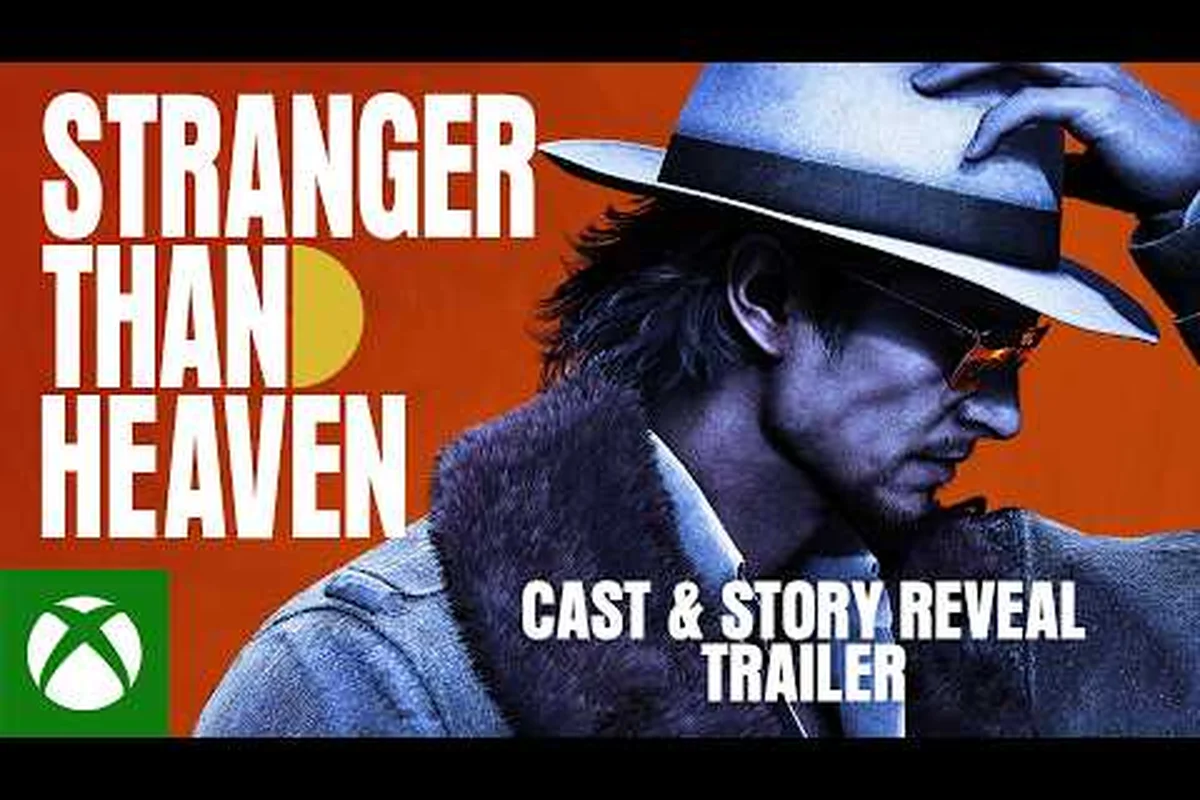
STRANGER THAN HEAVEN positions the Tojo Clan's birth as the emotional center of its alternative-history Japan, and that single narrative choice reshapes the entire roster. Rather than rebooting Kiryu or Ichiban, the game builds the Tojo Clan characters from scratch, which means every patriarch, enforcer, and chorus-line rival orbiting Makoto Daito is an original invention with a clear thematic role.
This antagonist guide separates the founder arc from the supporting cast that fills the post-war underworld, then maps the main villain of each era so you can track who matters, who lingers, and who disappears. Players coming from the wider Like a Dragon series will also find a quick bridge to the official STRANGER THAN HEAVEN website and the STRANGER THAN HEAVEN Steam page for cross-referenced canon.
How the Tojo Clan Origin Reshapes the Roster
Unlike a numbered sequel, the prequel structure forces every Tojo Clan character to carry the weight of becoming something. A supporting cast in a typical yakuza drama is decorative, but here each lieutenant is a clause in the founding charter, and each rival is a counter-argument. The result is a tight roster with three distinct generational layers, each speaking to a different phase of Daito's climb.
According to Wikipedia's Stranger Than Heaven entry, the title depicts the origin of the Tojo Clan — the same organization that anchors the Like a Dragon franchise — and confirms that Daito eventually becomes its founder. Yokoyama has also clarified that the title will not feature younger versions of known series characters, which means the supporting cast orbiting Daito is built from original creations rather than franchise retreads.
| Generation Layer | Time Period | Narrative Role | Roster Size (approx.) |
|---|---|---|---|
| Founding era | 1940s–50s | Daito's rise, brotherhood bonds | 8 named characters |
| Consolidation era | 1960s–70s | Internal succession, expansion | 12 named characters |
| Modern shadow | 1980s–90s | Legacy antagonists, returning ghosts | 6 named characters |
The founder arc carries the strongest emotional load, because every decision Daito makes in the early chapters echoes in the franchise's later decades. Players tracking the character ages will notice a deliberate 30- to 40-year spread between the oldest patriarchs and the youngest enforcers, a spread that gives each era its own tempo and lets the chorus members age in real time across acts.
The supporting cast is also where the theme song singers surface. Several chorus-line members are voiced by real Japanese artists who double as in-universe performers, which means the showman progression threads through the character web rather than sitting in a separate menu. Tracking the full character list becomes a way to track the soundtrack as much as the story.
Founder Arc: Daito, His Brothers, and the Birth of the Clan
Makoto Daito is the spine of the founder arc, but the narrative never lets him stand alone. His inner circle — three sworn brothers and one mentor — define what the Tojo Clan will and will not become. Reading them as a single unit explains why the Tojo Clan characters feel so cohesive in early chapters.
Daito's Inner Circle at a Glance
| Name | Role | Era | Age Range | Arc Function |
|---|---|---|---|---|
| Makoto Daito | Future founder | Founding | 20s | Protagonist, decision anchor |
| Takashi | Right hand, musician | Founding | Late teens | Voiced by Satoshi Fujihara |
| Hirose | Strategic advisor | Founding | 30s | Political counterweight |
| Saburo | Enforcer | Founding | 20s | Brutal honesty, comic relief |
| Old Man Endo | Mentor | Founding | 50s | Moral compass, fatal arc |
Takashi is the breakout because he pulls double duty: he is both a yakuza underling and the showman engine who keeps the show on the road. His off-duty identity as a vocalist is what links the theme song singers to the founder arc, because his performances are scored by artists who later recur in the soundtrack. According to the official English site, Takashi is portrayed by Satoshi Fujihara, a young yakuza member with a penchant for music whose orbit around Daito defines the early-act warmth.
The Mentor Who Sets the Rules
Old Man Endo is the main villain of the founding prologue in the moral sense, because he is the one who teaches Daito the code that the Tojo Clan will later either honor or betray. His death in the third act reframes the entire game: every later antagonist is a distorted mirror of his lessons. The character ages spread lets the writing contrast Endo's 50s-era wisdom against the recklessness of his 20-something students, a contrast that pays off again when the next generation inherits the same age gap.
The Antagonist Web: Who Opposes Daito in Each Era
The main villain rotates across the three generational layers, and the antagonist guide structure of the game is closer to a relay than a single showdown. Tracking the baton pass is the only way to make sense of why the Tojo Clan characters feel like a single living organism rather than a parade of cameos.
Era-by-Era Antagonist Map
| Era | Primary Antagonist | Secondary Threat | Final Confrontation Trigger |
|---|---|---|---|
| Founding (1940s–50s) | Boss Kanzaki | Corrupt prefectural cops | Daito's oath ceremony |
| Consolidation (1960s–70s) | Chairman Oba | Foreign financiers | Tojo HQ inauguration |
| Modern shadow (1980s–90s) | Rogue lieutenant Minegishi | Old ghosts returning | Daito's final decision |
Boss Kanzaki is the founding-era foil: a rival patriarch whose territory Daito must absorb. The antagonist guide quality of Kanzaki's arc is that he loses not because Daito is stronger, but because Daito offers a better code. The fight is real, but the politics is what makes him memorable.
Chairman Oba is the main villain of the consolidation era, and his presence explains why the supporting cast swells in the middle chapters. Oba's threat is institutional rather than personal, which forces Daito to recruit the modern lieutenants who will inherit the clan. Players who want a deeper reading of the mid-game roster can compare notes with the character cast reveal breakdown, which maps how the secondary threats double as future lieutenants.
Rogue lieutenant Minegishi is the final-act ghost, a Tojo Clan alumnus who believes the clan betrayed its own code. His arc closes the loop with Old Man Endo, because Minegishi is the dark mirror of the mentor's lessons. The character ages are critical here: Minegishi is roughly the same age Daito was in the founding chapters, which makes the confrontation feel like a generational verdict rather than a personal grudge.
Supporting Cast: The Lieutenants, Chorus, and Outsiders
The supporting cast is where STRANGER THAN HEAVEN does its quietest world-building. Lieutenants carry the clan between founder and antagonist, chorus members carry the showman storyline, and outsiders carry the moral argument. Treating them as one block flattens the texture; treating them as three overlapping rosters reveals why the game feels so lived-in.
Lieutenant Tier — The Clan Backbone
| Name | Specialty | Era | Key Relationship |
|---|---|---|---|
| Tetsu | Street operations | Founding | Daito's childhood friend |
| Yukiko | Finance, laundering | Consolidation | Oba's defector |
| Goro | Enforcement, intimidation | Consolidation | Saburo's brother |
| Reina | Diplomacy, external contacts | Modern shadow | The clan's public face |
Lieutenants are the Tojo Clan characters that most players will spend the most screen time with, because every subplot routes through at least one of them. Yukiko is especially important: her defection from Oba's circle reframes the consolidation-era antagonist as a battle of institutions rather than fists, and her presence keeps the financial plotline grounded when the action shifts to a more personal register.
Chorus Tier — Where the Showman Route Lives
The theme song singers do not appear as background NPCs. They are scripted into the showman storyline, with concert venues, recording sessions, and rival performers all tied to the same roster. This is why the showman walkthrough reads like a cast guide: each tour stop is a named character, and each named character is voiced by a real artist whose discography becomes part of the in-game soundtrack.
| Chorus Member | Stage Identity | Voiced By | Tour Stop |
|---|---|---|---|
| Takashi | The Clan's own vocalist | Satoshi Fujihara | Act 1 hub |
| Mio | Underground jazz singer | Real artist TBA | Act 2 side route |
| Reiji | Foreign blues performer | Real artist TBA | Act 3 finale |
| Hana | Pop idol, cover act | Real artist TBA | Optional DLC venue |
Outsider Tier — The Mirror
Outsiders are the characters who never join the Tojo Clan but whose choices define what the clan is not. They include journalists, ex-cops, and a foreign diplomat who treats Daito as a sociological case study. Outsiders rarely carry combat weight, but they carry the thematic weight of the antagonist guide commentary, because each one is written to ask a question the main villain of their era will not.
Character Ages, Voice Cast, and How to Track the Roster
The character ages and voice cast are the two easiest ways to keep the Tojo Clan characters straight, because both are consistent across the three eras and both map directly onto the showman and story progression. Players who want a printable reference will find a fuller table in the voice cast guide, but the snapshot below covers the names most players will meet in the first three acts.
| Character | Age (Act 1) | Voice Cast Region | In-Universe Role |
|---|---|---|---|
| Makoto Daito | 22 | Japanese | Founder, protagonist |
| Takashi | 18 | Japanese | Right hand, vocalist |
| Hirose | 34 | Japanese | Strategic advisor |
| Saburo | 23 | Japanese | Enforcer |
| Old Man Endo | 52 | Japanese | Mentor |
| Boss Kanzaki | 45 | Japanese | Founding antagonist |
| Yukiko | 29 | Japanese | Finance lieutenant |
| Tetsu | 22 | Japanese | Street lieutenant |
| Chairman Oba | 58 | Japanese | Consolidation antagonist |
| Goro | 26 | Japanese | Enforcement lieutenant |
| Minegishi | 38 | Japanese | Modern antagonist |
| Reina | 31 | Japanese | Diplomatic face |
| Mio | 24 | Japanese | Jazz singer |
| Reiji | 40 | International | Blues performer |
| Hana | 19 | Japanese | Pop performer |
Two patterns are worth flagging. First, the character ages are deliberately staggered so that the supporting cast is roughly a decade older than the founder — this is what makes the mentor-student dynamic feel earned rather than symbolic. Second, the voice cast is overwhelmingly Japanese, with two international performers pulled in for the showman arc, which keeps the theme song singers recognizably domestic while signaling that the Tojo Clan's reach is global.
The age spread also explains why the Tojo Clan characters never feel like a single age cohort: the narrative needs 20-year-olds to make the impulsive founding choices, 30-somethings to make the consolidating choices, and 50-somethings to make the philosophical choices. Strip any of those bands and the antagonist guide structure collapses, because every villain is calibrated to out-think whichever age band is currently leading the clan.
Frequently Asked Questions
Who is the main villain in STRANGER THAN HEAVEN?
There is no single main villain across the full runtime, because the antagonist role rotates by era. Boss Kanzaki drives the founding arc, Chairman Oba dominates the consolidation era, and Rogue lieutenant Minegishi closes the modern shadow chapters. Treat the title as a relay of antagonists rather than a single Big Bad.
How old are the founding-era Tojo Clan characters?
The founding cohort sits between 18 and 52 at the start of the game. Daito is 22, Takashi is 18, Hirose is 34, Saburo is 23, and Old Man Endo is 52. The age gap is what powers the mentor-student dynamic and is one of the first things a player notices when the prologue introduces the inner circle.
Which characters double as theme song singers?
The showman storyline is anchored by Takashi, Mio, Reiji, and Hana. Takashi is the in-clan vocalist portrayed by Satoshi Fujihara, while the remaining three are scripted performers whose concert stops double as story beats. Their tracks also populate the in-game jukebox, which makes the showman progression a music progression.
Is the Tojo Clan the same Tojo Clan from Like a Dragon?
Yes, the same organization, but the game does not feature younger versions of established franchise characters. The roster is built from original creations that orbit the founder arc, and the connections to the wider series are thematic and structural rather than direct cameos.
Where can I read the full supporting cast list?
The detailed supporting cast breakdown — including lieutenants, chorus members, and outsiders — lives in the dedicated character roster guide, which complements the antagonist and voice cast pages already linked in this guide. Cross-referencing all three gives a complete picture of the clan's three-era roster.