
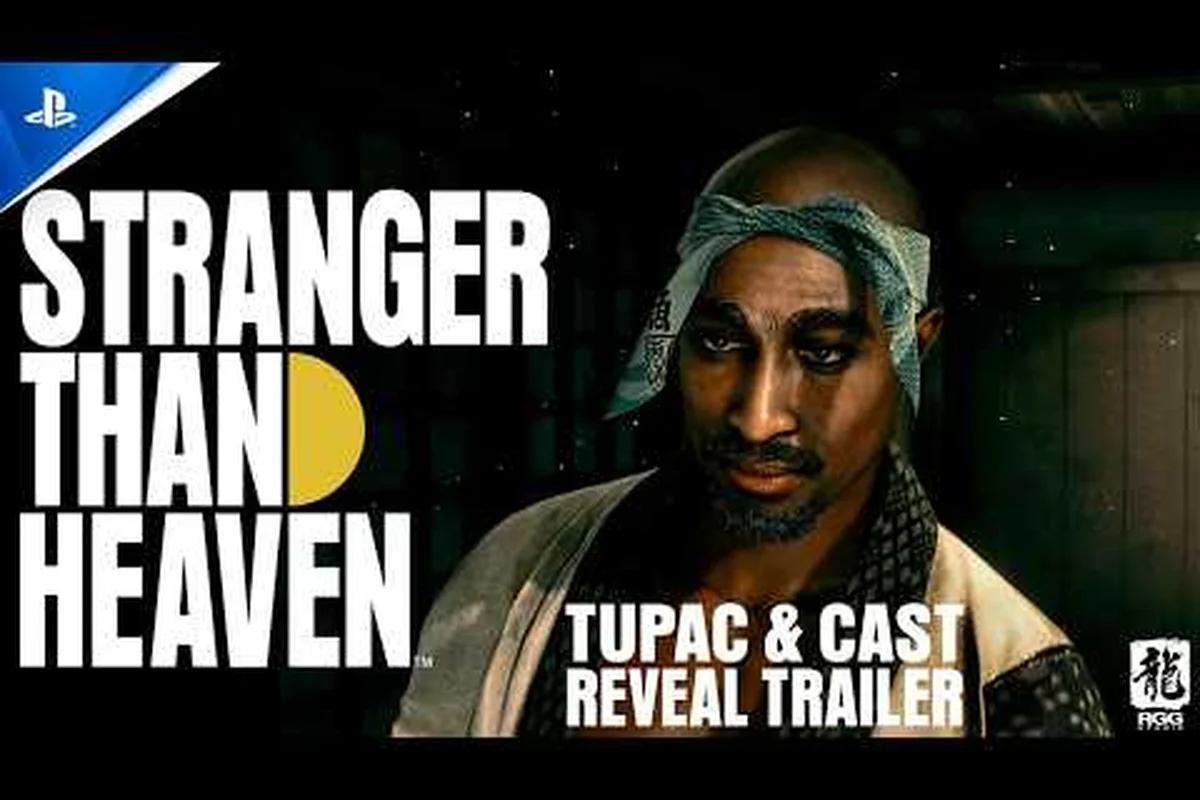
The STRANGER THAN HEAVEN protagonist, Makoto Daito, anchors the most ambitious prequel RGG Studio has ever attempted, tracing a half-century arc from a 1915 San Francisco dock to the founding of the Tojo Clan. If you want to understand who carries this story and why his journey reshapes the entire Like a Dragon timeline, this character profile breaks down everything currently confirmed, from his bilingual upbringing to the performer bringing him to life. The narrative premise is unusually bold for the series, and every confirmed detail points toward a generational crime saga rather than a single city block.
Who Is Makoto Daito and Why His Origin Matters
Makoto Daito (大東真) is a Japanese-American boy born to an American father and Japanese mother, raised in early 20th-century San Francisco before circumstances force him onto a ship heading west. The official site describes him as a stowaway hoping to start over in Japan, a setup that immediately places the STRANGER THAN HEAVEN protagonist at the intersection of two cultures during one of the most volatile periods in Pacific history. According to the official English site, this dual heritage is not cosmetic flavor text; it is the engine that drives every relationship he forms once he lands on Japanese soil.
Because the game releases on January 15, 2027 across PC, PlayStation 5, and Xbox Series X/S, the team at RGG Studio has positioned Makoto as a distant ancestor figure to the modern Like a Dragon protagonists, with the Tojo Clan eventually tracing its lineage back to his choices. This is why the character design matters so much to long-time fans: every faction, every tattoo tradition, and every oath ritual in the modern series is being retroactively seeded here.
Birth, Heritage, and the San Francisco Years
Makoto's earliest years are shaped by a mixed household in a city that is itself split between immigrant communities and old-money American families. The bilingual household gives him working fluency in both English and Japanese from childhood, a skill that later becomes a survival tool when he navigates the yakuza underworld, foreign ship crews, and occupying authorities. Community previews emphasize that the game will lean into this duality through dialogue choices, environmental storytelling, and the music tracks curated for each district he passes through.
| Life Stage | Approximate Year | Location | Defining Detail |
|---|---|---|---|
| Birth | ~1905–1910 | San Francisco | Son of an American father and Japanese mother |
| Departure as stowaway | 1915 | San Francisco docks | Boards a ship bound for Japan |
| Early Japan years | 1915–1920s | Port city (likely Kobe or Yokohama) | Learns the language and street economy |
| Mid arc rise | 1930s | Expanding urban underworld | Builds his first crew |
| Tojo Clan founding | ~1960s (per series canon) | Tokyo | Establishes the clan that will dominate the franchise timeline |
The 1915 departure date is significant because it places Makoto in Japan just as the Taisho era is giving way to early Showa, a period when organized crime was crystallizing out of labor unions, nationalist societies, and street gangs. That context gives the STRANGER THAN HEAVEN protagonist something the modern cast rarely has: a front-row seat to the actual birth of the yakuza archetype.
Why a 50-Year Story Arc Is a Series First
Previous Like a Dragon entries have either followed a single protagonist across one crisis or rotated new leads every few entries, but none have attempted a continuous multi-decade arc. Makoto's story reportedly spans roughly 50 years of in-universe time, which is why the team cast a performer who could plausibly age on screen. According to the official store description, the narrative uses flashback framing, period transitions, and supporting characters from each era to keep the protagonist's identity legible even as the world around him changes.
This structural choice also explains why the supporting cast is unusually large. Each decade of Makoto's life needs its own allies, rivals, and antagonists, which is why characters like Orpheus, Amaru, and Takashi matter so much: they are not interchangeable party members, they are the people who shape specific chapters of his 50-year arc.
Yu Shirota Brings the STRANGER THAN HEAVEN Protagonist to Life
The performer cast as the STRANGER THAN HEAVEN protagonist is Yu Shirota (城田優), a Japanese-American actor and singer with a long stage and screen career in both Tokyo and Hollywood productions. His casting is not incidental; the bilingual background and cross-cultural identity of Makoto Daito mirror Shirota's own upbringing between Japan and the United States, which the production team has leaned into during press previews. According to the official STRANGER THAN HEAVEN website, his portrayal is intended to carry the character through multiple life stages without losing the emotional core of a man who never quite stops feeling like an outsider.
Yu Shirota's Career Context for the Role
Yu Shirota has built a reputation for roles that require physical transformation, emotional restraint, and language switching, all of which are central to playing a character who ages 50 years on screen. The casting is also a continuity choice: RGG Studio has long favored performers who can deliver both motion-capture performance and on-camera presence, and Shirota fits that mold. For players tracking the franchise's creative direction, his involvement signals that this entry will lean more cinematic than the dungeon-crawler detour the series took in some recent installments.
| Yu Shirota Profile | Detail |
|---|---|
| Name | Yu Shirota (城田優) |
| Nationality | Japanese-American |
| Role | Makoto Daito, the STRANGER THAN HEAVEN protagonist |
| Career arc prior to STH | Stage musicals, Japanese TV dramas, Hollywood supporting roles |
| Performance scope | Full mo-cap, facial capture, multiple life stages across a 50-year arc |
How Motion Capture Handles the 50-Year Aging
Because the STRANGER THAN HEAVEN protagonist must appear as a child, a young man, a hardened mid-career criminal, and an elder founder, the production pipeline reportedly blends practical makeup, digital aging, and voice modulation. According to community previews and the official Steam listing, the team avoided the shortcut of casting multiple actors for the same role, which means Shirota's performance has to register across radically different physical states. That choice raises the bar for emotional consistency: a single gesture or vocal pattern has to read as authentic whether the camera is on a 12-year-old runaway or a 60-year-old clan head.
Yu Shinjo, Orpheus, and the Relationships That Define Makoto
Makoto Daito does not become the Tojo Clan's eventual founder in isolation, and three early relationships in particular set the trajectory of his entire life. The first is his boyhood bond with Yu Shinjo (真城優), a friend-turned-rival figure whose own ambitions run parallel to Makoto's, the kind of partnership that turns combustible the moment both men want the same throne. The second is his adoptive mentor Orpheus, a smuggler and street philosopher who teaches the runaway how to survive the port districts. The third is Amaru, a figure whose loyalties shift depending on which decade of the story the player is in.
Yu Shinjo: Friend, Mirror, and Rival
Yu Shinjo functions as the emotional counterweight to Makoto, a character who shares his street education but chooses ambition over loyalty at the critical fork. The STRANGER THAN HEAVEN protagonist and Shinjo reportedly begin as inseparable allies before their worldview splits, and the player will need to navigate that fracture through dialogue choices, side activities, and combat encounters that test whether the bond can survive the yakuza climb. This rivalry also matters for franchise lore: it seeds the structural tension between honor and ambition that the modern Tojo Clan inherits.
| Relationship | Bond Type | Approximate Era | Narrative Function |
|---|---|---|---|
| Yu Shinjo | Childhood friend, eventual rival | 1915–1930s | Mirrors the protagonist's choices and pressures the moral arc |
| Orpheus | Mentor, smuggler father figure | 1915–1920s | Teaches survival skills and street philosophy |
| Amaru | Shifting ally / wildcard | 1930s–1940s | Tests the protagonist's judgment across decades |
| Takashi | Later-generation ally | 1940s–1960s | Bridges the protagonist's arc into the Tojo founding generation |
Orpheus and the Smuggler Code
Orpheus is the figure who first shows Makoto how a port city actually works: which warehouses are blind spots for the police, which crews honor their debts, and which captains will sell a stowaway's location for the right price. According to the official site, Orpheus operates as a smuggler with a personal code, which gives the early game its moral scaffolding. Players who want to understand why Makoto eventually chooses a structured clan over freelance smuggling can trace that decision directly back to Orpheus's lessons.
Amaru and Takashi: Wildcards Across Decades
Amaru appears as a more ambiguous figure whose allegiances depend on which decade the narrative is currently in, and the game reportedly uses that ambiguity to keep the player guessing even during downtime in the hub city. Takashi, by contrast, belongs to the later generation that helps translate the STRANGER THAN HEAVEN protagonist's street instincts into the institutional language of a formal organization. Together, they are the connective tissue between the personal story of Makoto and the institutional story of the Tojo Clan, a relationship map players will need to follow closely if they want the full picture when the game launches on January 15, 2027.
How Makoto's Arc Connects to the Tojo Clan and the Wider Series
The Tojo Clan is the connective tissue of the entire Like a Dragon franchise, and STRANGER THAN HEAVEN is positioned as the story of how that organization came into being. Makoto Daito does not found the clan alone, and the game is careful to distribute credit across the relationships above, but the institutional DNA of the Tojo Clan traces back to his choices. According to the Stranger Than Heaven Wikipedia entry, the protagonist is described as the eventual founder, a phrase that signals institutional authorship rather than solitary creation.
What the Tojo Clan Inherits From the STRANGER THAN HEAVEN Protagonist
Modern Tojo traditions, oath rituals, hierarchy titles, and even tattoo iconography are seeded in the decades Makoto spends building the organization. Players who already know the modern series will recognize fragments of those traditions during cutscenes, and the game reportedly rewards that recognition with bonus dialogue, hidden collectibles, and a late-game sequence that reframes a familiar franchise scene in a new light. The STRANGER THAN HEAVEN Steam listing confirms that the title sits inside the Like a Dragon universe and ships on PC, PlayStation 5, and Xbox Series X/S.
Timeline Mapping Between Makoto's Era and Modern Entries
| Era | Makoto's Life Stage | Modern Series Touchpoint |
|---|---|---|
| 1915 | Stowaway departure | None (pre-history) |
| 1930s | Crew formation | None (pre-history) |
| 1940s–1950s | Organizational consolidation | Founding myths referenced in later Tojo lore |
| ~1960s | Tojo Clan founding | Direct ancestor to modern protagonists |
| 2000s–present | (Deceased or retired) | Modern Like a Dragon cast inherits the institution |
What This Means for New Players
Players who have never touched the Like a Dragon series can still enjoy the STRANGER THAN HEAVEN protagonist as a standalone character study, because the script reportedly explains every franchise callback in line. Returning fans, on the other hand, will get the layered payoff of seeing how a familiar institution was actually built, and the writing team has hinted that some side content only unlocks if the player already understands the modern Tojo hierarchy. For the full early-game setup, the beginner guide covers how the prologue transitions into the first playable chapter, which is where most of Makoto's early bonding with Yu Shinjo and Orpheus happens.
Practical Takeaways Before the Game Launches on January 15, 2027
For anyone planning to play on day one, the most useful preparation is reading Makoto's story the way the writers structured it, as a generational saga rather than a single-city crime story. That framing changes how players should approach side content, because some collectibles and missable scenes are tied to specific decades of the protagonist's life, and skipping them means losing context for later story beats. According to community coverage, the developers have confirmed that the title runs on the Dragon Engine, which is the same tech used in recent Like a Dragon entries, and that the PS5 version will include PS5 Pro enhancements.
Pre-Launch Checklist for Following the Protagonist Arc
-
Read the official character bios for Yu Shirota, Yu Shinjo, Orpheus, and Amaru before launch so the early bonding scenes land with full emotional weight.
-
Decide whether you want a strict canon playthrough or an alternate-route run, because several relationship milestones lock in different founding-era outcomes.
-
Track which side activities are tied to which decade of Makoto's life, since the missable content guide maps these to specific chapter windows.
-
Budget time for the prologue, because Yu Shirota's performance in the early San Francisco and stowaway sequences is reportedly the emotional anchor for the rest of the 50-year arc.
Day-One Setup Recommendations
| Setup Task | Reason |
|---|---|
| Pre-load the title on Steam or PS5 | Avoids day-one server friction on a 50+ hour playthrough |
| Pick a save slot naming convention | Useful when tracking multiple Makoto timeline branches |
| Set display to original aspect ratio | Period transitions rely on framing cues |
| Enable English and Japanese audio | Bilingual performance is part of Makoto's identity |
What the STRANGER THAN HEAVEN Protagonist Teaches About the Franchise Going Forward
RGG Studio has used this prequel to recalibrate how the series tells origin stories, and Makoto Daito is the template they will likely follow for future historical entries. His blend of personal vulnerability, institutional ambition, and cross-cultural identity gives the writers a flexible character who can anchor both quiet character scenes and large-scale faction warfare. For long-term franchise planning, that is a much more durable foundation than a one-game protagonist, and it explains why so much of the marketing has focused on Yu Shirota's casting rather than on specific gameplay systems. The full early-hours setup is covered in the story walkthrough, which traces Makoto's opening decisions and the first major branch points in his relationship map.
Frequently Asked Questions
Who is the STRANGER THAN HEAVEN protagonist?
The STRANGER THAN HEAVEN protagonist is Makoto Daito, a Japanese-American boy born to an American father and Japanese mother who stows away on a ship from 1915 San Francisco to Japan and eventually becomes the founder of the Tojo Clan. The character is performed by Yu Shirota across multiple life stages spanning a 50-year narrative arc.
Which actor plays Makoto Daito?
Yu Shirota (城田優) plays Makoto Daito, the STRANGER THAN HEAVEN protagonist. He handles full performance capture, multiple life stages, and both English and Japanese dialogue because of the character's bilingual identity and the 50-year time span the game covers.
How does Makoto connect to the Tojo Clan from the main Like a Dragon games?
Makoto Daito is the eventual founder of the Tojo Clan, which means the institutional traditions, hierarchy, and oath rituals seen in the modern Like a Dragon series trace directly back to his choices. The game positions him as the originator of the clan's founding code, with allies like Takashi helping translate his street instincts into formal organizational language.
Who are Yu Shinjo and Orpheus in relation to the protagonist?
Yu Shinjo is Makoto's childhood friend who becomes a rival as both men climb the underworld, while Orpheus is the smuggler mentor who teaches the runaway how to survive the port districts. Both relationships are core to the early game and set the moral and tactical patterns the protagonist carries into his later founding-era decisions.
Will understanding the protagonist's arc require playing previous Like a Dragon games?
No, the script is written so new players can follow Makoto Daito's arc without prior franchise knowledge, and every Tojo Clan reference is explained in line. Returning players will simply get extra payoff from recognizing institutional traditions and hierarchy cues, but the STRANGER THAN HEAVEN protagonist story is fully self-contained as a generational origin tale.